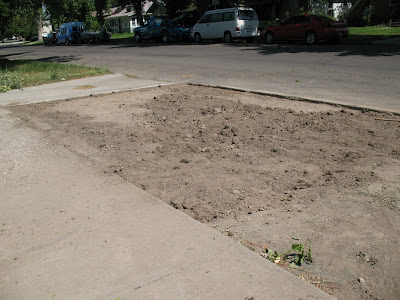


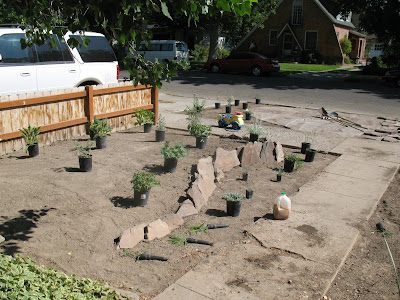


Going from the
"Trash of the 'Hood" to the "Smarts of the 'Hood". Our Native-Scape has brought many comments and questions. People are looking for ways to conserve water and time. But when you tell them they have options other than planting a lawn full of water sucking bluegrass, they don't believe you.
"Native turf, what's that?" they say. Our area's average rainfall is about ten inches per year. Instead of watering our bluegrass lawn three times a week, we can water our native turf twice a month and spend less time mowing and less chemical input.
As you can see in my pictures above, native in not boring...quite the opposite really. Not only are we saving water by planting a landscape full of natives, we are also providing habitat and creating a sense of place...instead of a typical landscape using fifty or so similar plants, no matter what geographical location, native plants can add diversity and uniqueness in each bio-region across the United States. The native plants we installed are from the shrub-steppe cold desert climate of Southern Idaho.
Pollinators like moths, butterflies and bees often evolve to prefer native flowers over the introduced, ornamental plants found in most landscapes. The pollinators life cycles coincide with bloom times of native flowers and their body structures (ie mouth parts) have adapted to fit the plants native to their area better than a non-native species.
So as you can see, planting natives is a big deal: saving precious water, creating proper habitat for native wildlife and utilizing a landscape that is a better fit into our immediate environment.
Plants provided by
Conservation, Seeding and Restoration.More photos
here


